2 for 1 Ties!

 Confession,  I have a small obsession with dressing my boys to coordinate… Like everyday.

 My addiction could be an expensive one,  but I have mastered a few tricks to keep  my boys dapper and my bank account (Husband) happy.

There are  quite a few tutorials available for making little boy ties from scratch,  this is not one.  Granted they are cute,  but I like them to look like a ” little mini man tie”, I am not a huge fan of the cotton.

Here’s how:
 If it is true what they say “A picture is worth a 1000 words” then this would be a VERY long post. 

#1  The Necktie:

 1. Use a stitch ripper and pull out the stitches on the back of the tie,  take out the stitches until it hits the “bottleneck”.

2.   The stabilizer  (white thick material)  will run through the whole tie, push it to the side (leave attached). 

3.  Take an iron and create a new width,  simply  iron out the existing pressed edge and make the tie more narrow.

4. Do this on both sides so that the tie is even.

5. It should look like this now.

 6.  Now is time to size down the stabilizer… ( the white piece seen in step 2)  You will use your new  ironed tie as a template.  Simply put the stabilizer under the tie and mark the new size.

7.  Now that it is marked,  cut down the stabilizer.

8.  Then put the stabilizer back  in the tie.

9.Now  use a blind stitch  to finish the seam in the back.  There is a great tutorial here.

10.  You  should now have a  adult length skinny tie…Simply tie a basic knot ,  either recruit your husband or follow this diagram.

11.   Your tie should now look similar to this,  (keep in mind you will want to tie it according to the height of the wearer).
Once you have it tied at the correct  length you will  cut off the excess about 2 inches above the knot.

12.  The excess will become the 2nd tie.

13. Fold in the edges of  the cut off ends and insert elastic.  Measure the recipients neck  to get the measurement  of the elastic needed.  For my son I only needed about 5″ of elastic.  Keep in mind this will need to fit over his head…
 Repeat on the other side…

Congrats you have completed phase 1!
 
# 2 The Bow Tie
1.  You will now use the excess you cut off in step 12 of the first tie. 
First cut off approximately  6-10″ depending on the size of the child (for instance a  newborn would look like a clown in a 10 “tie)   You will  essentially  be dividing the tie in half, I would measure the general width you would like the bow tie to be on the recipient before cutting.
2.  Take the strip you just cut and make a loop and sew the two ends together. (It doesn’t need to be pretty,  it will be hidden.

3. Now use the remainder of the original strip. Simply tie a knot around the loop you just created.

4. Ta da! Almost done!
.)

5.  Now repeat step 15 in the neck tie tutorial and you are done!  Booyah.


 6.  Your little men will look so dapper and you will get tons of compliments,  I guarantee it!


 Hope all goes well and make sure to send pictures!

  (function(i,s,o,g,r,a,m){i[‘GoogleAnalyticsObject’]=r;i[r]=i[r]||function(){
  (i[r].q=i[r].q||[]).push(arguments)},i[r].l=1*new Date();a=s.createElement(o),
  m=s.getElementsByTagName(o)[0];a.async=1;a.src=g;m.parentNode.insertBefore(a,m)
  })(window,document,’script’,’//www.google-analytics.com/analytics.js’,’ga’);

  ga(‘create’, ‘UA-42109138-1’, ‘sawdust2stitches.com’);
  ga(‘send’, ‘pageview’);

  (function(i,s,o,g,r,a,m){i[‘GoogleAnalyticsObject’]=r;i[r]=i[r]||function(){
  (i[r].q=i[r].q||[]).push(arguments)},i[r].l=1*new Date();a=s.createElement(o),
  m=s.getElementsByTagName(o)[0];a.async=1;a.src=g;m.parentNode.insertBefore(a,m)
  })(window,document,’script’,’//www.google-analytics.com/analytics.js’,’ga’);

  ga(‘create’, ‘UA-42131831-1’, ‘sewingandsanding.blogspot.com’);
  ga(‘send’, ‘pageview’);

Posted in boys, clothing, tutorial | 1 Comment

Cabinet Makeover Part 2

 This is the “funner” part of the cabinet refinishing process. After all the tedious  prep work, here  comes the payoff!  You actually begin to  feel like you are making progress instead of making giant steps backwards.

 I started  with the cabinet bases (as opposed to the doors).

I went through and taped the interior lip, as well as where the cabinets meet the wall.

 I used Zinsser Primer 1-2-3,  I first painted the cracks and edges with a good paint brush. Immediately after use the foam rollers on the large surface areas.  (I love these rollers, they are cheap and I have had great results, with no streaks! )

 When  painting/priming you will want  to work in small sections.  For example,  don’t go through and do all your cracks, and joints, and then all your roller painting. Instead,  follow up with the roller  shortly  after you use the brush,  this will create a consistent finish.  Be warned primer does dry very quickly.

 While your cabinet bases are drying,  you can start on your doors.  I had my doors set up in the garage, and the kitchen.  I set them on top of  bins so that they would be elevated and I would easily  be able to paint the edges.


  Now that all your surfaces are all primed,  wait until they are completely dried.  Then take  your foam sanding block and  do a quick sanding to all surfaces.  Then wipe down all surfaces completely.
 I did 2 coats of primer, ( I would prefer to do an extra coating of primer than an extra coat of paint.)

PAINTING TIME!

 I used …


Repeat the same steps from priming.  I did do 2 coats of paint as well,  make sure you sand inbetween coats.  You do not need to sand after final coat.

So this is your itinerary:

1. Primer
         (Allow dry time,  if doing doors flip over and repeat)
2. Sand/Wipe Down
3. Primer
          (Allow dry time,  if doing doors flip over and repeat)
4. Sand/Wipe Down
5. Paint
          (Allow dry time,  if doing doors flip over and repeat)
6. Sand/Wipe Down
7. Paint
          (Allow dry time,  if doing doors flip over and repeat )
  
8. Stand Back and admire!


  (function(i,s,o,g,r,a,m){i[‘GoogleAnalyticsObject’]=r;i[r]=i[r]||function(){
  (i[r].q=i[r].q||[]).push(arguments)},i[r].l=1*new Date();a=s.createElement(o),
  m=s.getElementsByTagName(o)[0];a.async=1;a.src=g;m.parentNode.insertBefore(a,m)
  })(window,document,’script’,’//www.google-analytics.com/analytics.js’,’ga’);

  ga(‘create’, ‘UA-42109138-1’, ‘sawdust2stitches.com’);
  ga(‘send’, ‘pageview’);

  (function(i,s,o,g,r,a,m){i[‘GoogleAnalyticsObject’]=r;i[r]=i[r]||function(){
  (i[r].q=i[r].q||[]).push(arguments)},i[r].l=1*new Date();a=s.createElement(o),
  m=s.getElementsByTagName(o)[0];a.async=1;a.src=g;m.parentNode.insertBefore(a,m)
  })(window,document,’script’,’//www.google-analytics.com/analytics.js’,’ga’);

  ga(‘create’, ‘UA-42131831-1’, ‘sewingandsanding.blogspot.com’);
  ga(‘send’, ‘pageview’);

Pin It
Posted in makeover, paint | 4 Comments

Painting Cabinets Part 1

 When making my list of  “To Do’s” refinishing the cabinets was on the very top.  I knew it would make the biggest impact on the house, but I was terrified to do it!  It was a daunting task,  that I was afraid I would mess up and it would end up costing a lot of $$$ fix.

Previous Owners Interior

 So I researched, and researched, and researched.  I researched until I was so sick of it that I gave up and just got started.

 This is what I learned.

 This process is about 80% prep work.

Supply List:

Fine Sanding Disks
Foam Sanding Block
Wood Grain Filler (Optional)
Paintable caulk
Primer ( I used Zinsser 123)
Paint ( I used Behr Semi-Gloss)
Good paintbrush
High density 3-4″ roller
Paint Roller
Paint Tray
Rags
Drop Cloth

Prep:  I began by taking off all the doors,  ( I made sure to label where they all go), and also removed all hardware.

Sanding:

 I  started with the cabinet bases.  I did the majority of the sanding with an electric sander using a “fine” grade sand paper.  This is my strong suggestion… hook up a vacuum to the sander. I was able to get away with leaving the cabinet bases in place (instead of removing them), and my house was not covered in dust!

  I sanded  every inch of the cabinet base,  EXCEPT the interior, I DID do the inside lip but not the actual interior.

When sanding you DO NOT need to take it down to natural wood, if you are painting you only need to rough up the surface enough to make it smooth and make sure it is NOT glossy.

  Next… the doors. Ugh.
 I took a sanding block and sanded all the crevices really well,  basically any space that I would not be able to  reach with the electric sander.
  I used these awesome little foam sanding blocks!  They are awesome.

After you have the crevices done,  move on to the larger surface areas.  I  did both front and back!  I know that there are some tutorials that  don’t .  That would drive me crazy.

After you are finished sanding…your  arm may  feel like it is permanently vibrating. Your  hand  may be deformed to a claw like state,  but,  you are done the with most tedious part!

 Wipe down all your cabinet pieces well!  Let dry….

 (EXTRA STEP)  I did this because I was afraid the wood grain would show through.  I used  this product  I simply  smeared this on the cabinet panels and used a putty knife to scrape it off.  It then required another once over with the sander, and another wipe down.

It DID  diminish the wood grain,  but it was not eliminated.  If I were to do this over I don’t know that it was worth the effort.  I might do this on your top cabinets where they will have more lighting on them, and the grain may be more visible.

(ANOTHER EXTRA STEP)  This was another personal preference.  I  remember  cleaning the crevices on the lower cabinets and having all sorts of gross gunk in them.   I knew I was painting these white and knew that there would inevitably  be dirty.  I took a small bead of caulk and filled the  crevice so that  when food did drip down the front of the cabinets it would  not get stuck in the crack.
  This extra step  has been worth it to me,  especially on  the cabinets below the sink and  the cabinets below where I typically stand when I cook.

Simply apply a very SMALL bead (line) of caulk,  then wet your finger, and slide along the surface.  It will smooth it out and you can remove the excess.  Then allow to dry.
( I forgot to take pictures, of this step but the wonderful folks over at “Addicted 2 Decorating” had the same stroke of genius.

Now take a breather and get ready for the REAL fun!

Stay tuned for Part 2,  painting!

  (function(i,s,o,g,r,a,m){i[‘GoogleAnalyticsObject’]=r;i[r]=i[r]||function(){
  (i[r].q=i[r].q||[]).push(arguments)},i[r].l=1*new Date();a=s.createElement(o),
  m=s.getElementsByTagName(o)[0];a.async=1;a.src=g;m.parentNode.insertBefore(a,m)
  })(window,document,’script’,’//www.google-analytics.com/analytics.js’,’ga’);

  ga(‘create’, ‘UA-42131831-1’, ‘sewingandsanding.blogspot.com’);
  ga(‘send’, ‘pageview’);

Posted in makeover, paint | 3 Comments

Rustic Chalkboard Sign


 So  I know that chalkboard paint is all the rage and there are plenty of tutorials on how to make your own.  This is not one.   I just wanted a sign that LOOKED like a chalkboard.  After putting in a  lot of effort on lettering I was not about to erase it. It was going to be permanent.

 Here is what I did.

 Supplies needed:

1×3 (2)                 =   $4
Paneling              =   $5
Black Paint          =  $1-?
Liquid Nails        =  $2

1st step:
 Paneling-  You can find this at Home Depot,  ask an associate where their “Handy Panels” are. (Handy panels are typically identified by their size. They are either 2’x2′ or 2’x4′  pieces.   You will have a lot of wood choices, just pick the cheapest  with a smooth finish.  OR if you want to save some time and possibly money (depending on if you have paint on hand).  They have chalkboard handy panels available at Home Depot. 

Cut down your panel to  desired size , I  cut mine to 20″x48″.

 2nd step:  If you bought a chalkboard panel,  skip this step.  If not paint your panel black with a flat/matte paint,  you just don’t want it glossy!

3rd Step:  Get creative!  There are  many places you can find vintage fonts, here are a few. This is where you come up with any saying or quotation you would like and use your favorite fonts, or  simply duplicate mine!

After you brainstorm your  message and favorite fonts,  you can either free hand or trace your letters!
You can simply print your letters off then use  tracing/transfer paper to transfer it.

 Once you have your message on the board use either white paint or  these…

 I love these markers,  but I have not found them in stores, but you can order them online.   Elmers does have version that is available in most  office/craft stores.

 Simply  go over your traced letters with this marker and it will then be PERMANENT.  So make sure you like it.

 Your board should look something like this.

4th Step:  Get out your 1×3’s
Cut 2  @ 45″ short end to short end with 45 degree angles
Cut 2  @ 17″ short end to short end with 45 degree angles

Sand them all down and then stain or paint.

5th Step:  Once 1×3’s are dry you will use your liquid nails and apply the 1×3’s directly yo the top of your chalkboard, creating a frame.  There should be about 1.5″ of  1×3 board that will sit on top of the chalk board.

Once glued, use either clamps or set something heavy on top until it dries. 
 ALMOST DONE: Take some chalk and do some shading and spread the dust around.  Make it look authentic with  smeared chalk.  It makes a great impact!
Then you are done! You can add hardware to hang it, or it can be leaned against the wall.


   I actually  did this from all leftover supplies,  so I have a nice large custom art piece for free!

  (function(i,s,o,g,r,a,m){i[‘GoogleAnalyticsObject’]=r;i[r]=i[r]||function(){
  (i[r].q=i[r].q||[]).push(arguments)},i[r].l=1*new Date();a=s.createElement(o),
  m=s.getElementsByTagName(o)[0];a.async=1;a.src=g;m.parentNode.insertBefore(a,m)
  })(window,document,’script’,’//www.google-analytics.com/analytics.js’,’ga’);

  ga(‘create’, ‘UA-42131831-1’, ‘sewingandsanding.blogspot.com’);
  ga(‘send’, ‘pageview’);


Pin It
Posted in paint, wall decor | 2 Comments

Office Wall Collage

 Our  “office” was actually intended to be a formal dining area. At this point in our life  a formal dining area seemed impractical. What  I really needed was and office/sewing room.    The only problem was that  the room  was practically part of the front entry.  So I needed to make it cohesive,and have some flow leading into the living room
This is what the previous owners did… hmm…

   My vision for the office was this,  it needed to be functional (see craft cabinet ideas here) , and it involved  a lot of frames.  I wanted lots of texture and contrast, but most importantly it needed to be done cheaply.  So here is what  I did.


 I went to thrift store and found a plethora  of frames, any size and shape, as long as they were cheap and all wood they fit the bill.  I think I spent maybe $15.00 on all of them.   I brought them home and laid them out on the GROUND it is much  easier to create a collage if you simply rearrange without putting new holes in the wall.  Once I found  a good arrangment I then put them up on the wall.

Once I had them up on the wall I went through and used post it notes and wrote out what colors I would want them to be.  Then I got to work sanding and painting.
 I chose a natural light wood, black, white and a terrecota colors as my  color scheme for the frames. 
 Don’t be afraid to mix it up,  I also incorporated some chalk boards, mirrors,  signs, and plaques.  A collage can have more than just frames!


  Here is the final result,  I added a few shelves and added terecotta planters to help carry the color.  I rather love the way it turned out! 
  (function(i,s,o,g,r,a,m){i[‘GoogleAnalyticsObject’]=r;i[r]=i[r]||function(){
  (i[r].q=i[r].q||[]).push(arguments)},i[r].l=1*new Date();a=s.createElement(o),
  m=s.getElementsByTagName(o)[0];a.async=1;a.src=g;m.parentNode.insertBefore(a,m)
  })(window,document,’script’,’//www.google-analytics.com/analytics.js’,’ga’);

  ga(‘create’, ‘UA-42131831-1’, ‘sewingandsanding.blogspot.com’);
  ga(‘send’, ‘pageview’);

  (function(i,s,o,g,r,a,m){i[‘GoogleAnalyticsObject’]=r;i[r]=i[r]||function(){
  (i[r].q=i[r].q||[]).push(arguments)},i[r].l=1*new Date();a=s.createElement(o),
  m=s.getElementsByTagName(o)[0];a.async=1;a.src=g;m.parentNode.insertBefore(a,m)
  })(window,document,’script’,’//www.google-analytics.com/analytics.js’,’ga’);

  ga(‘create’, ‘UA-42109138-1’, ‘sawdust2stitches.com’);
  ga(‘send’, ‘pageview’);

Pin It
Posted in wall decor | 1 Comment

Boy’s Belts

 I have been asked by a number of people,  “Where do you get the boy’s belts ?”.   This may come as a shock ,  I made them.  Shocker.
  They are some of my old belts, and some I find at thrift stores.

 Want to make some for your munchkins?

Just find a  LEATHER  belt, that  is considerably  bigger than  the size you will need.  You need leather so that when you cut it,  it will not fray.

 Take the measurement  of the recipients  waist and add 4-5″.  You will simply cut off the excess of the belt.  I   have found my sewing scissors work well to cut through the belt.  I kind of cringe every time I do. But, it does really work well. 

Use the end that you just cut off (the end with the holes) as a template.  Lay it on top  of the   freshly cut end and mark where your new set of holes will be.  I  just used a  drill  with a 1/4″ bit.

Then stand back and admire your work…

“Hey Wyatt show me your belts”…

 That works too…

  (function(i,s,o,g,r,a,m){i[‘GoogleAnalyticsObject’]=r;i[r]=i[r]||function(){
  (i[r].q=i[r].q||[]).push(arguments)},i[r].l=1*new Date();a=s.createElement(o),
  m=s.getElementsByTagName(o)[0];a.async=1;a.src=g;m.parentNode.insertBefore(a,m)
  })(window,document,’script’,’//www.google-analytics.com/analytics.js’,’ga’);

  ga(‘create’, ‘UA-42131831-1’, ‘sewingandsanding.blogspot.com’);
  ga(‘send’, ‘pageview’);

  (function(i,s,o,g,r,a,m){i[‘GoogleAnalyticsObject’]=r;i[r]=i[r]||function(){
  (i[r].q=i[r].q||[]).push(arguments)},i[r].l=1*new Date();a=s.createElement(o),
  m=s.getElementsByTagName(o)[0];a.async=1;a.src=g;m.parentNode.insertBefore(a,m)
  })(window,document,’script’,’//www.google-analytics.com/analytics.js’,’ga’);

  ga(‘create’, ‘UA-42109138-1’, ‘sawdust2stitches.com’);
  ga(‘send’, ‘pageview’);

Posted in boys, clothing, sewing | 1 Comment

Nautical Bathroom

Ugh, this room was so incredibly boring.  I wanted a pattern in here,  and a color,  but I still wanted to keep it bright. So I started by painting the cabinets white. (Tutorial coming soon).  Then  I came up with the idea of doing a nautical lattice pattern….

  
  I used 2 different size tapes in order to create this look.  I went through and used a pencil  and marked where all my lines would begin and end.  Then just connected the dots with tape.  I am not going to lie, this part took forever!  I would measure and remeasure, I determined the best way to do it was to use a quilters square.  Just make sure your first line is perfectly straight!  Then you can use it as a guide . 

                                                                     
Okay now that you want to throw your roll of tape across the room,  go get your paint. I know your first instinct is to grab your new color and start painting… NOPE.   Grab the original color of the wall.  So in my case I had to get out the white. You are going to completely paint over all your tape.  Reason ?  When you paint,  no matter what brand the tape, I still get the paint bleeding through.  BUT if you paint over your tape the same color on the wall,  any bleeds  will not be visible because it is the same color. (Are you still following me ?).      

So once my base color dried (and sealed the tape to the wall so that no blue can leak through) , you can then take your new wall color and apply it. In my case I used a grey blue.  Wait until the your topcoat is completely dry , then you can take off your tape. Inevitably, there will be some touch up spots,  but you are almost done!  Just stand back and admire your work for a while before you pull out the itty bitty brush. 

Was this project easy ? Yes. Was is it time consuming?  You betcha.   I don’t regret it though.  I love the way it turned out. I wouldn’t suggest this for a huge complicated space,  working around the shower and mirror was not my favorite. I could see myself doing this again with a flat open wall though, perhaps an accent wall ?


  TA DA!

  (function(i,s,o,g,r,a,m){i[‘GoogleAnalyticsObject’]=r;i[r]=i[r]||function(){
  (i[r].q=i[r].q||[]).push(arguments)},i[r].l=1*new Date();a=s.createElement(o),
  m=s.getElementsByTagName(o)[0];a.async=1;a.src=g;m.parentNode.insertBefore(a,m)
  })(window,document,’script’,’//www.google-analytics.com/analytics.js’,’ga’);

  ga(‘create’, ‘UA-42131831-1’, ‘sewingandsanding.blogspot.com’);
  ga(‘send’, ‘pageview’);

  (function(i,s,o,g,r,a,m){i[‘GoogleAnalyticsObject’]=r;i[r]=i[r]||function(){
  (i[r].q=i[r].q||[]).push(arguments)},i[r].l=1*new Date();a=s.createElement(o),
  m=s.getElementsByTagName(o)[0];a.async=1;a.src=g;m.parentNode.insertBefore(a,m)
  })(window,document,’script’,’//www.google-analytics.com/analytics.js’,’ga’);

  ga(‘create’, ‘UA-42109138-1’, ‘sawdust2stitches.com’);
  ga(‘send’, ‘pageview’);

Posted in bathroom, makeover, paint | 4 Comments

ConverTABLE


 Okay, so  I had a kitchen table and whenever I needed more space or was mopping,  I would push it up against the window.   It  made the kitchen so much bigger! I loved it and so did my Husband,  but the designer in me hated it.  So,  here was my newly created problem… push it against the wall and have space, or in the middle and have it be functional….
Well I love a good problem…


  Let me preface this with a disclaimer.  I have never used Auto Cad before and this was my first attempt, so no judging. 

 Now that, that is all cleared up, let’s make a table! (Well, 2 to be exact.)

Here is your shopping list:
 3-  2″x6″ (8′)                                                                                                          $6.00 x 3 =    $18.00
6-  2″x3″ (8′)                                                                                                          $2.00 x 6 =    $12.00
2-  “1×3” (8′)                                                                                                          $2.00 x 2 =    $  4.00
                                                                                                                         Est lumber =    $ 34.00ish
 You will also need:
-sandpaper
-paint and/or stain  (I used Jacobean by Minwax for the top and Behr Ultra White for base)
-paint brushes
– 2 1/2″ Screws
-3 1/2″ Screws
– Brad nails (either hand drive or for nail gun) 
-Wood filler
Tools Suggested:
– Miter Saw
– Electric Hand Sander
– Drill 
– Brad nailer or hammer
– Kreg Jig
Okay, so you have visited your local hardware. (I am personally a Home Depot Girl), we are ready to start cutting!
Cut list:
 2×3’s
    4 @ 39″ (top support, footrest)
    8 @ 29″ (legs)
    4 @ 13″ (top side supports)
    4 @ 11″ (bottom side supports)
 2×6’s
    6 @ 48″ (top planks)
 1×3’s
    4 @ 11″ (side fronts)
    2 @ 39″ (front)

At this stage I personally double check and make sure all measurements that are supposed to be the same are EXACTLY the same. If there are any discrepancies I even them out.  
 Then go crazy with the sander. 
Now,  I know some people prefer to apply paint or stain after everything is put together, not me.  I hate trying to paint all the surfaces on a 3D object, flat boards are easier.  Like I said personal preference.  I undoubtedly will end up doing some touch-ups, but  I still say it is easier.
 Assembly
 Okay,  lets do  this…
-Center your 11″ 1×3 on the 13″ 2×3, there should be 1.5″ space on either side. 
-Secure the 1×3 to the 2×3. If you have a nail gun, use it, if not use a hammer and brad nails,  or wood glue.— 
 -Pre-drill and fasten the the 13″ 2×3 to the back of the legs using 2 1/2″ screws. 
-Take your 11″ 2×3″ and secure it so that the base of the new support is 3″ from the bottom of the leg. If you have a kreg jig use it. If not you will need to pre-drill through the leg  and use a 3 1/2″ screw. 
– Now do it all over again, 3 more times…
Still with me ?  Good.
– Take one of your  39″ 2×3’s and secure it at the ends of your 13″ 2×3’s.  (It should fit perfectly in the corner)
-Take your 39″ 1×3 and secure it to the front. ( It will be inset about 3/4″)
-Take your other 39″ 2×3″ and secure it so that the base of the new support is 3″ from the bottom of the leg. Again if you have a kreg jig use it. 
-Repeat on the other table.
Ok next comes the tops…
– I would strongly suggest  having these stained/painted in advance,  getting down in the cracks after this  point could be near impossible. 
–  Lay 3 of your 2×6’s side by side on the ground, with the “top” facing down, flip your table base upside down and lay directly on top of the 2×6’s.
– Then predrill  through your 2×3 supports so that your will have screws fastening all 3 of your 2×6 boards  to the base. 
– Flip over and marvel at your work, and then do it again.
Side notes, I know some people will wonder about the cracks,  you can put a wood filler inbetween them,  sand it down and then  seal it.   I did not do that on this table. I made the spacing between the boards large enough that I could clean between with a knife if needed and water would just go through.  I have used the filler method before and it has to be very close and sealed very well to work.  I had a problem with a seam that repeatedly popped on a kitchen table (actually it is what pushed  me to make this table.)  Whatever you do make sure your filler is able to be stained or painted depending on your finish. 
Ta-da, problem solved,  a table that  could be functional even while pushed against the wall, and still be beautiful as a full kitchen table! 
 
  (function(i,s,o,g,r,a,m){i[‘GoogleAnalyticsObject’]=r;i[r]=i[r]||function(){
  (i[r].q=i[r].q||[]).push(arguments)},i[r].l=1*new Date();a=s.createElement(o),
  m=s.getElementsByTagName(o)[0];a.async=1;a.src=g;m.parentNode.insertBefore(a,m)
  })(window,document,’script’,’//www.google-analytics.com/analytics.js’,’ga’);

  ga(‘create’, ‘UA-42109138-1’, ‘sawdust2stitches.com’);
  ga(‘send’, ‘pageview’);

  (function(i,s,o,g,r,a,m){i[‘GoogleAnalyticsObject’]=r;i[r]=i[r]||function(){
  (i[r].q=i[r].q||[]).push(arguments)},i[r].l=1*new Date();a=s.createElement(o),
  m=s.getElementsByTagName(o)[0];a.async=1;a.src=g;m.parentNode.insertBefore(a,m)
  })(window,document,’script’,’//www.google-analytics.com/analytics.js’,’ga’);

  ga(‘create’, ‘UA-42131831-1’, ‘sewingandsanding.blogspot.com’);
  ga(‘send’, ‘pageview’);


Posted in paint, plans, table | 6 Comments

Craft Cabinet

 Made up problem:
 I  use our office as my sewing room, it is an open room and I didn’t want all my craft supplies  to be part of the decor.

Solution: Craigslist is one of my favorite things, I found this computer hutch made of solid wood for $35.00! ( Why on earth would you not tidy it up before you took a picture attempting to sell it ?)

My darling husband went and picked it up for me around 4 ?  By about 9 this is what it looked like. 
 

Sanded it down really well, and put 2 coats of primer on this puppy,  it smelled like cats and smoke,  I was not running any risks of it smelling up my house.   I have used this primer for multiple projects in my house and can’t complain. 

 Next  I added drawers to the bottom cubbies  so that I could utilize all of the space.  I also raised up the entire unit.  I built a basic platform out of 2×4’s and then put a piece of 1×4 on the front  of it. It made it sit  nearly 4″ taller and it needed the visual weight to make it a little more bottom heavy.

I ended up distressing  the cabinet after the final coat of paint.  I know there are a lot of  fancy products for distressing, but I go basic.
 I always  just use a sander with a fine grade paper,  I scuff up the edges and areas where there would be natural wear. Then I take an old rag and a little stain and run it over the edges. ( I work with  one small area at a time) Immediately after applying the stain use  a different rag with a little bit of baby oil on it, and rub the area you are working on.  It will even out the stain  and make it easier to work with.   Then  just let it dry.


TA DA!  A craft closet in a room that doesn’t have a closet.  Problem solved.

Break down :
Media Cabinet    $35.00
Paint                   $0.00   (leftover from previous projects)
Stain                   $0.00   (leftover from previous projects)
      Total       =    $35.00

  (function(i,s,o,g,r,a,m){i[‘GoogleAnalyticsObject’]=r;i[r]=i[r]||function(){
  (i[r].q=i[r].q||[]).push(arguments)},i[r].l=1*new Date();a=s.createElement(o),
  m=s.getElementsByTagName(o)[0];a.async=1;a.src=g;m.parentNode.insertBefore(a,m)
  })(window,document,’script’,’//www.google-analytics.com/analytics.js’,’ga’);

  ga(‘create’, ‘UA-42131831-1’, ‘sewingandsanding.blogspot.com’);
  ga(‘send’, ‘pageview’);

  (function(i,s,o,g,r,a,m){i[‘GoogleAnalyticsObject’]=r;i[r]=i[r]||function(){
  (i[r].q=i[r].q||[]).push(arguments)},i[r].l=1*new Date();a=s.createElement(o),
  m=s.getElementsByTagName(o)[0];a.async=1;a.src=g;m.parentNode.insertBefore(a,m)
  })(window,document,’script’,’//www.google-analytics.com/analytics.js’,’ga’);

  ga(‘create’, ‘UA-42109138-1’, ‘sawdust2stitches.com’);
  ga(‘send’, ‘pageview’);

Posted in before and after, makeover, paint | Leave a comment

How to Refinish a LIght Fixture

When we bought our home I was trying to come up with temporary fixes to minor eye sores.   I needed something that would last  until  I could figure out exactly what  I wanted.   This light fixture is  a perfect example.  Granted it was not terrible,  but it was not adding to my space.

Like I said not awful,  not great.  So I made a drum shade, and covered the sucker up.

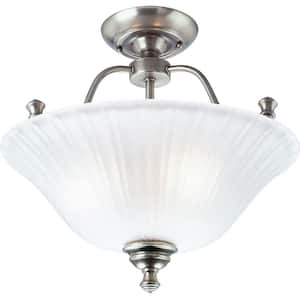
 I had been keeping my eye out for a more permanent solution, and  my patience paid off.  I found this little beauty at a thrift store for less than $6.00. 


It just needed a little lovin’. I started by taking it apart, and then used a fine grade steel wool  to scuff up the surface just a  little.  After you sand it, make sure you wipe it down well.
 I then used this awesome product… I have used this all over my house and love it!

After waiting the appropriate allotted time I reassembled the light and installed this little guy.  I love it. Bonus : I have been trying to come up with an excuse to use one of these awesome vintage light bulbs, and I found it. Perfection.

Breakdown

Light Fixture       $5.50
Spray Paint         $0.00   (Leftover from previous projects)
Light Bulb          $10.00 (Home Depot)
                      =    $15.00


  (function(i,s,o,g,r,a,m){i[‘GoogleAnalyticsObject’]=r;i[r]=i[r]||function(){
  (i[r].q=i[r].q||[]).push(arguments)},i[r].l=1*new Date();a=s.createElement(o),
  m=s.getElementsByTagName(o)[0];a.async=1;a.src=g;m.parentNode.insertBefore(a,m)
  })(window,document,’script’,’//www.google-analytics.com/analytics.js’,’ga’);

  ga(‘create’, ‘UA-42131831-1’, ‘sewingandsanding.blogspot.com’);
  ga(‘send’, ‘pageview’);

  (function(i,s,o,g,r,a,m){i[‘GoogleAnalyticsObject’]=r;i[r]=i[r]||function(){
  (i[r].q=i[r].q||[]).push(arguments)},i[r].l=1*new Date();a=s.createElement(o),
  m=s.getElementsByTagName(o)[0];a.async=1;a.src=g;m.parentNode.insertBefore(a,m)
  })(window,document,’script’,’//www.google-analytics.com/analytics.js’,’ga’);

  ga(‘create’, ‘UA-42109138-1’, ‘sawdust2stitches.com’);
  ga(‘send’, ‘pageview’);

Posted in before and after, lighting, spray paint | Leave a comment